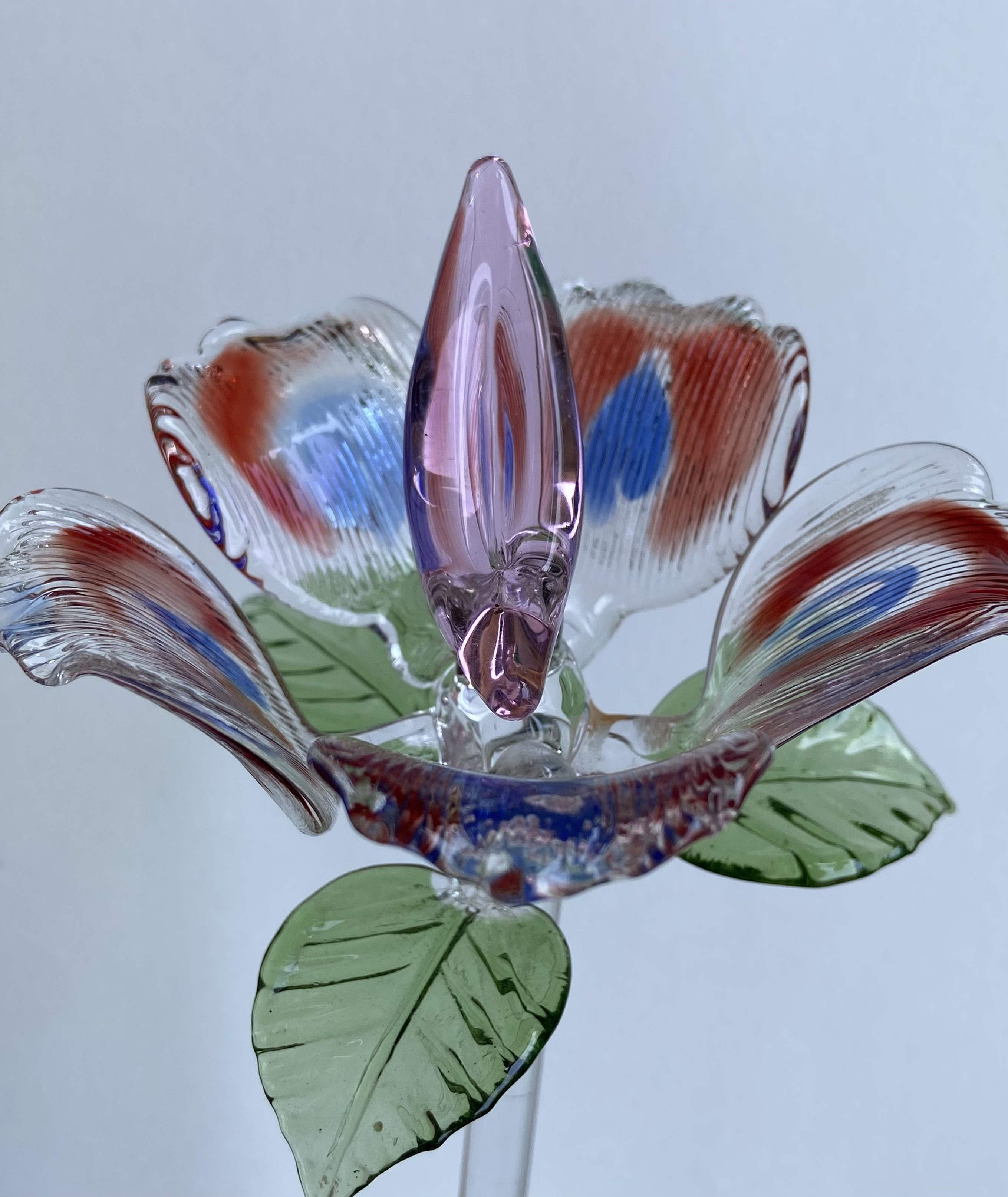
The flower has long functioned as a metaphor for sexuality, reproduction, and sensuality. By materialising this metaphor literally, the artwork collapses the distance between the organic and the human, exposing how deeply bodily meanings are embedded within natural symbols. The transparent and translucent quality of glass amplifies this idea of exposure—nothing is concealed, yet nothing is overtly aggressive. The forms exist in a fragile balance between attraction and discomfort. Placed together in a single vase, the flowers operate collectively rather than as isolated specimens. This gathering suggests coexistence, plurality, and shared vulnerability. The vase becomes a container of social norms, traditions, and expectations—holding, preserving, and at times restraining these expressions of bodily identity. The repetition of genital and breast forms across multiple flowers challenges hierarchies of gendered representation, questioning why certain bodies or desires are celebrated, censored, or silenced. Ultimately, the work reflects on the politicisation of the human body and its natural functions. By aestheticising anatomy through floral imagery, the artwork invites viewers to reconsider notions of obscenity, purity, and beauty. It proposes that the body, much like nature, is neither shameful nor sacred by default, but shaped by the gaze that perceives it.
Medium: borosilicate glass using flame work